Share some love for Christine and DWU in the comments section!
Let’s keep on building the movement!
Tweet
2010 was a historic year for domestic workers, women, people of color, immigrants, low wage workers, and labor rights! With the signing of the Domestic Workers Bill of Rights on August 31, 2010 and its implementation on November 29, 2010, over six years of hard-fought struggle in the New York State legislature finally won rights, respect, and recognition for domestic workers! Lets take a look at some of our 2010 highlights:
This year…
More than 1,000 allies turned out in New York City and Albany in support of dignity for domestic workers!
DWU conducted and published an independent study entitled “Domestic Workers and Collective Bargaining”. We surveyed over 500 workers for the report. The Department of Labor integrated our findings into their report, concluding that collective bargaining is feasible for domestic workers, making it the crucial next step in building power.
DWU and the Urban Justice Center launched a legal clinic, to swiftly address and win justice for cases of abuse and exploitation.
Worker-leaders led a leadership training program and a nanny training course.
DWU supported California sister organizations in launching the CA Domestic Workers Bill of Rights Campaign.
We held our 10th Anniversary Gala at SEIU 32BJ, drawing over 400 attendees, including our Keynote Speaker Arlene Holt Speaker, Executive Vice President of the AFL-CIO.
DWU members made nearly 2,000 new domestic worker contacts to continue building a strong base for dignity and justice.
In partnership with the National Employment Law Project, DWU published a “Know Your Rights” guide for workers.
And, there is more to come, in 2011…
DWU will launch a massive “Know Your Rights” public education campaign, to ensure that all domestic workers know their rights, and employers their responsibilities.
DWU and Jews for Racial and Economic Justice will start the “Domestic Justice Dialogue Project”, and begin piloting collective bargaining on a neighborhood scale.
The DWU Ambassadors Program will launch, making trained domestic worker representatives available as first points of contact in key neighborhoods throughout the city. They will form neighborhood groups and conduct “Know Your Rights” trainings.
DWU in partnership with the Urban Justice Center will continue to fight for justice for individual workers whose rights have been violated, and will work with the Department of Labor to ensure these cases are swiftly addressed.
We will continue to help build the National Domestic Workers Alliance and support domestic worker organizations in California & Massachusetts, which are poised to introduce their own Bill of Rights legislation.
DWU will continue the struggle for fair labor standards, and inclusion in labor laws, both in Albany and through innovative collective bargaining models.
Thank you to all of our friends and supporters who rallied to bring justice, dignity, respect, and recognition!
Let's keep making greater change in 2011!

Today, over 200,000 privately employed nannies, housekeepers, and elder caregivers in New York have gone to work so that our employers could go to theirs, just as we and those who came before us have done for centuries. We’ve dedicated our hearts and health to providing essential care for countless families and homes. Yet for so many years, we labored in the shadows, vulnerable to all forms of abuse and exploitation. But today is not like any other day. November 29, 2010 is a new day. It marks the end of invisibility and exclusion for all domestic workers, as the nation’s first Domestic Workers Bill of Rights goes into effect.
The new law is justice for over 75 years of race- and gender-based discrimination. The tide is turning. After six years of organizing to pass legislation that would begin to value the critical work we do, we finally won recognition! For the first time, we are guaranteed basic rights and protections that most other workers have enjoyed for decades. As of today, we have the right to be protected against discrimination and harassment, a minimum of one day of rest per week, and those of us who are live-in have the right to overtime pay at time and a half our regular rate of pay. We also have a mandatory minimum of at least three paid days leave per year. Companions for the sick and elderly are now also covered under the Minimum Wage Act of New York.
The work of defending our dignity and respect has just begun – we have achieved minimum labor protections, and now we must work to make the Bill of Rights work for us! In partnership with the NY Department of Labor and Jews for Racial and Economic Justice, we are launching a mass outreach campaign to educate workers and employers alike so that we understand our rights and responsibilities, respectively.
The struggle is, of course, not over. We must also now build upon this victory and keep organizing to secure fair not just minimum standards in the industry. Together with the National Domestic Workers Alliance and the Urban Justice Center, we recently conducted a survey of over 500 workers to assess what it takes to achieve a level of security on the job for domestic workers. The results show that there is still high variation in the benefits received and in worker experiences negotiating with their employers. We found out that many workers earn less while working longer hours and therefore find it hard to meet their basic needs. Benefits like sick days, paid vacation, and personal days vary from worker to worker, and many workers report not receiving notice or severance pay when their jobs have ended. The precarious nature of this industry makes it difficult for workers to negotiate better terms and conditions. When a worker’s concern is keeping her job, it’s not easy for her to assert her rights or to bargain with her employer. To get these benefits for all workers, we need to negotiate collectively for better standards – united we are stronger! That's why we are working around the clock with our coalition partners to win inclusion of domestic workers in the New York State Labor Relations Act, which would give us the right to bargain collectively for benefits and fair standards at work.
The answers, as we know, are not just to be found in Albany. Starting in the new year, we will also have DWU representatives—fellow workers who have been trained on the new law and negotiations—available in key neighborhoods throughout the city. They will be first responders, making sure workers have the resources they need, when they need them, to defend and uphold their rights. These representatives will hold regular meetings, so that workers in the neighborhood can share information and learn more about their rights, and about working towards better standards in the industry.
A new era begins. Domestic workers in New York are setting bold precedents. Sister organizations in California are preparing to launch a Bill of Rights campaign in the Spring of 2011, and Massachusetts is poised to follow. Also, in June 2011, the International Labor Organization will be passing a convention on the rights of domestic workers, for which the NY Bill of Rights campaign and legislation have been held up as examples.
Now is the time to build real power for all workers everywhere. In our work lies the key to deep social transformation. We can help lead the way for the working people of this country to collectively reach our human potential and realize our hopes and dreams for a better future for everyone.
Related links:
http://www.labor.ny.gov/sites/legal/laws/domestic-workers-bill-of-rights.page


 DWU's 10th Anniversary Gala last Saturday was nothing short of a huge success. With about 400 people in attendance, the room was overflowing with support, love and hope for the future of the movement.
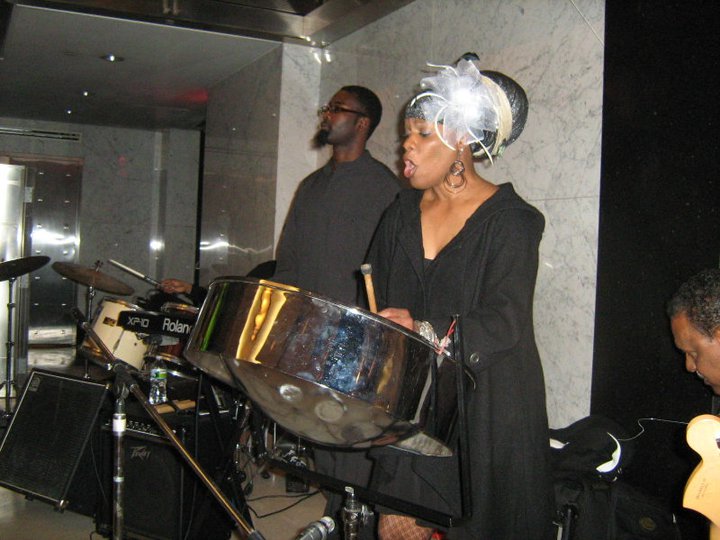 Wonderful music, delicious food and amazing words from Arlene Holt-Baker of AFL-CIO, Jeribu Hill of Mississippi Workers' Center and our honorees were some of the highlights of the night.
 We want to thank everyone who attended, donated, volunteered and had fun! Without you, none of this would be possible. DWU felt so loved and supported. Thank you for celebrating ten years of building a movement for dignity, respect and recognition for the work that makes all other work possible. The struggle continues!
